Native high-resolution sampling is slow and unstable, while pixel-space
super-resolution operates after decoding and amplifies its noise. LUA upscales the
latent itself — a single feed-forward pass before one decode.
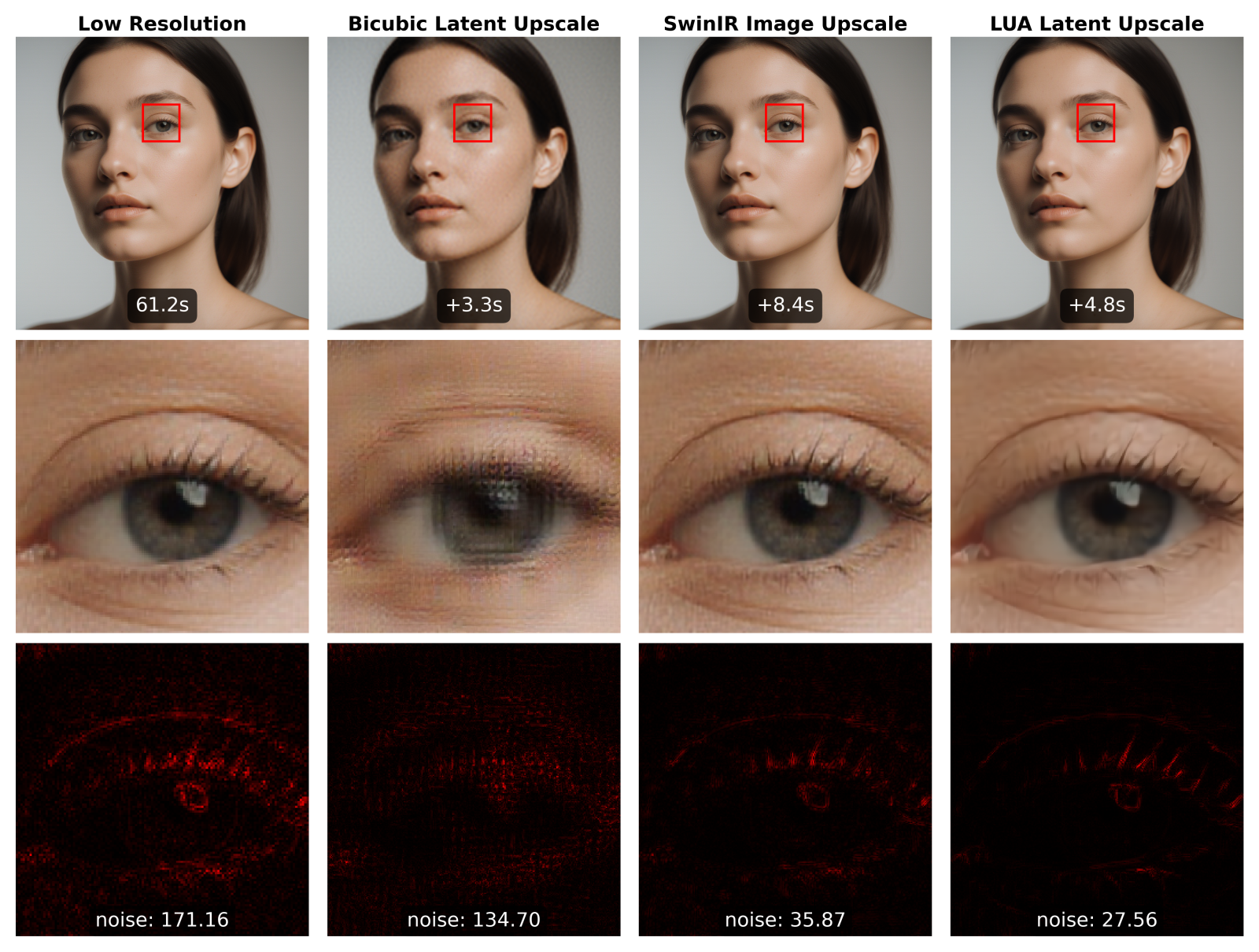
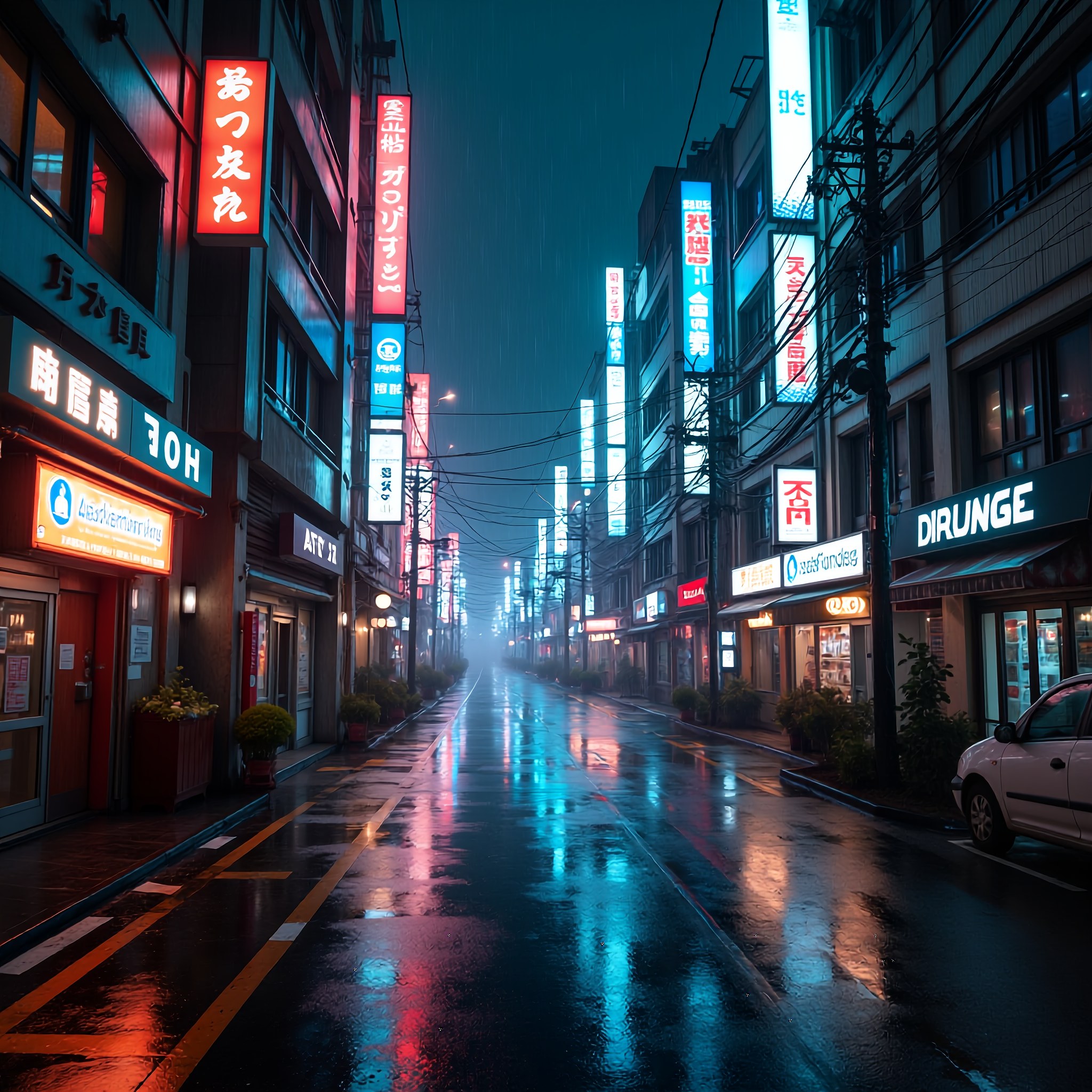
FLUX, 1024² → 2048²; left to right: base decode, bicubic
latent, SwinIR (pixel-space SR), LUA (latent-space). LUA recovers fine structure with
the least added noise.
Abstract
Generating high-resolution images with latent diffusion models is limited by the cost of
high-resolution denoising, while post-hoc super-resolution introduces artifacts and additional
latency by operating after decoding. We present the Latent Upscaling Adapter (LUA), a
lightweight module that performs super-resolution directly on the generator's latent code
before the final VAE decoding step. LUA integrates as a drop-in component requiring no
modifications to the base model or additional diffusion stages, enabling high-resolution
synthesis through a single feed-forward pass in latent space.
A shared Swin-style backbone with scale-specific pixel-shuffle heads supports ×2 and
×4 factors with nearly 3× lower decoding and upscaling time. Because LUA
operates directly on latents, it transfers across diffusion systems — including
SDXL, SD3, and FLUX — through architecture-level reuse, adapting only the input
convolution with brief fine-tuning rather than retraining from scratch. Extensive experiments
demonstrate that LUA closely matches the fidelity of native high-resolution generation at
2K and 4K while offering a practical and efficient path to scalable image synthesis.
Highlights
One lightweight adapter, three properties
Single-stage latent upscaling
Super-resolution on the latent operates over 64× fewer spatial positions than
pixel-space SR, matching modern high-resolution pipelines at 2K/4K with less noise and
lower latency.
Multi-scale, shared backbone
A single Swin-style backbone with jointly trained, scale-specific pixel-shuffle heads
serves both ×2 and ×4 — one model for every factor.
Cross-model generalization
The same backbone runs on SDXL, SD3, and FLUX by swapping only the first convolution to
match latent channels, then briefly fine-tuning — reuse, not retrain.
Method
One feed-forward pass in latent space
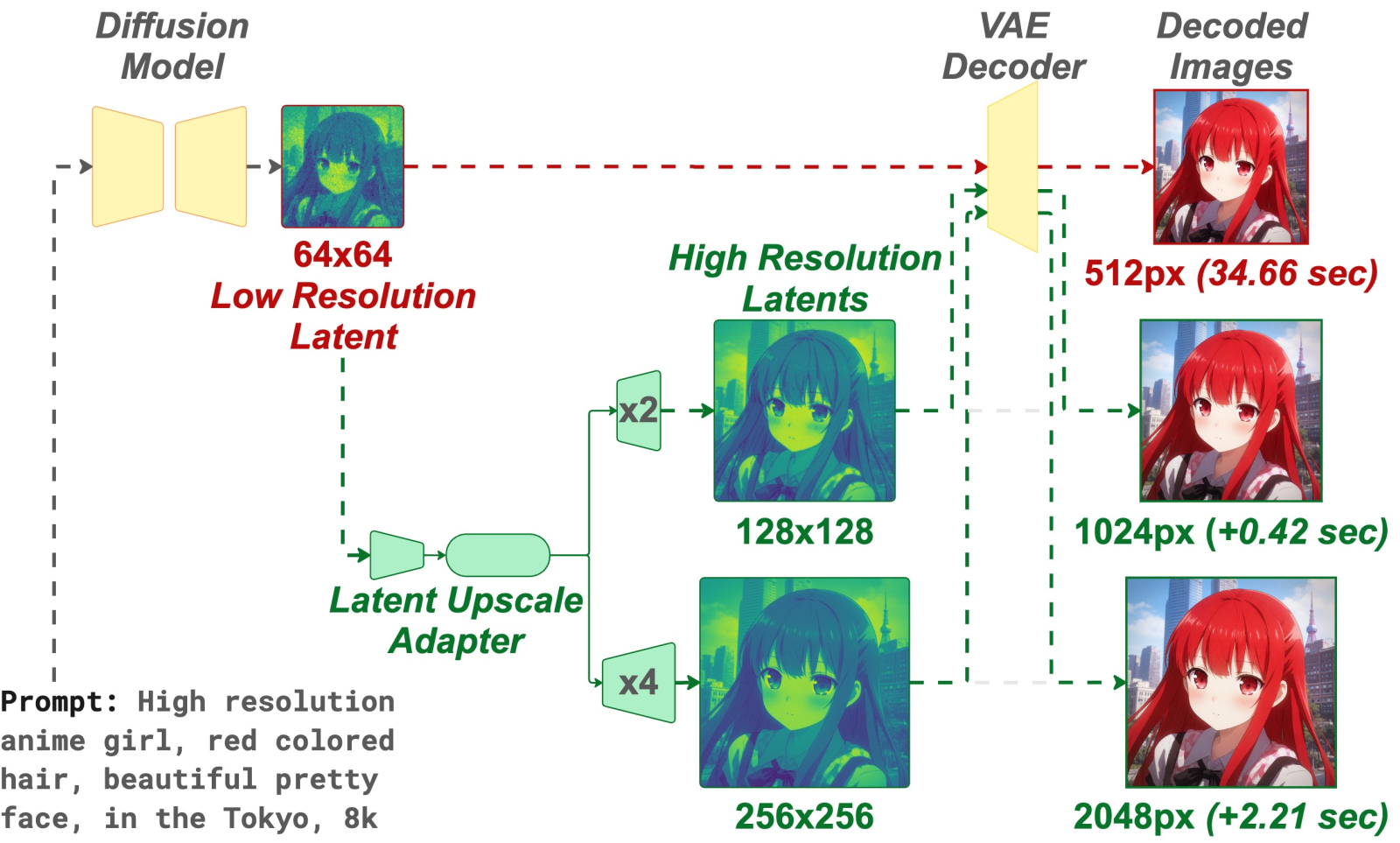
LUA sits between the generator and the VAE decoder: it takes the low-resolution
latent, upsamples it ×2 or ×4, and a single decode produces the final image.
No extra diffusion stages, no base-model changes.
Animated pipeline · 1/2
From text to 4K. One latent upscale, one VAE decode — no second
diffusion stage.
Original method overview. LUA turns a 64 × 64 latent into
128 × 128 (×2) or 256 × 256 (×4)
before a single VAE decode, adding 0.42 s or
2.21 s on an L40S.
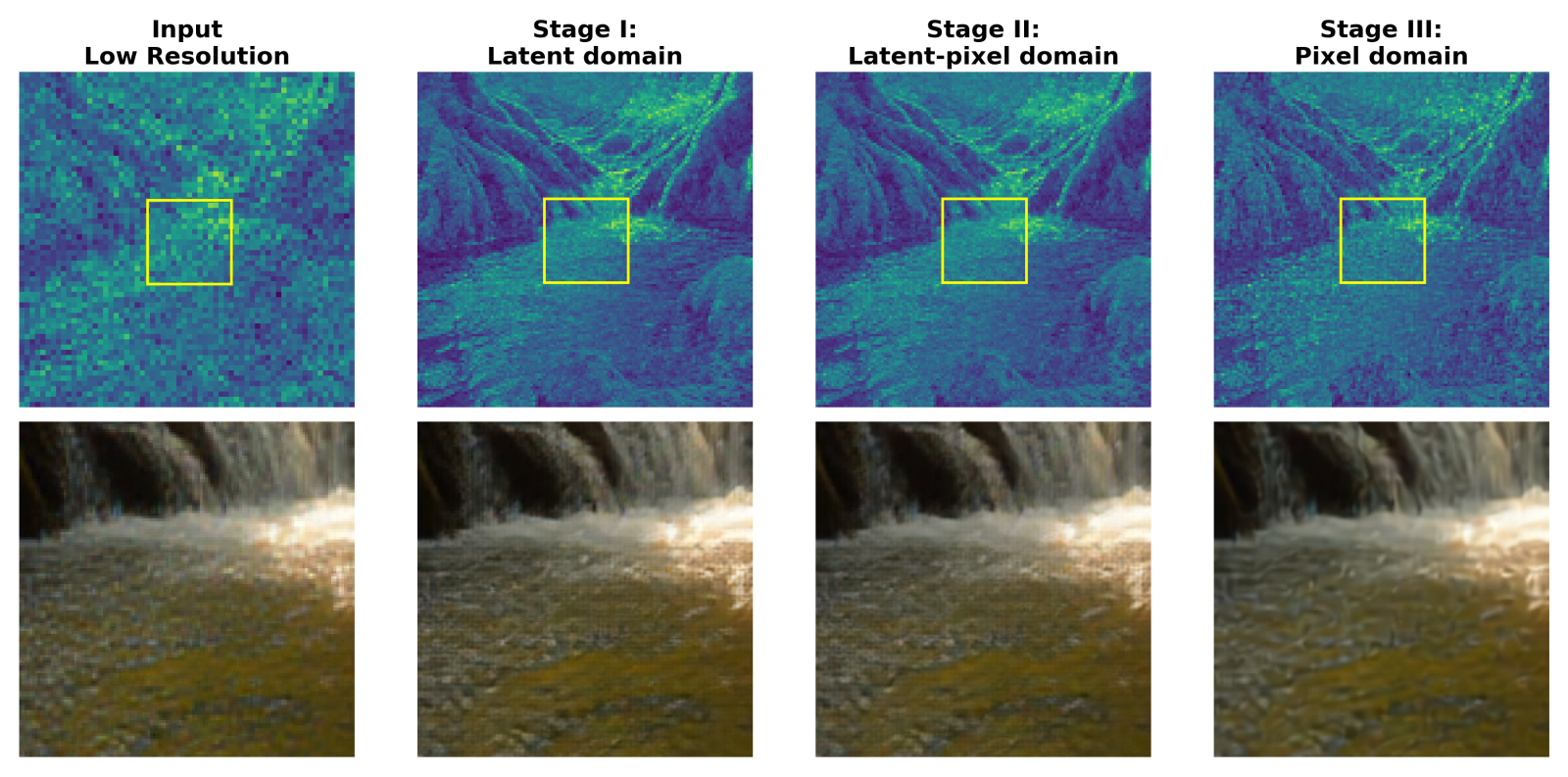
Three-stage curriculum. Stage I aligns latent structure and frequency spectra;
Stage II couples latent fidelity to decoded appearance with high-frequency emphasis;
Stage III refines edges in pixel space, without re-diffusion. Top: latent feature maps;
bottom: 8× decoded crops.
Generalization
One adapter, many models
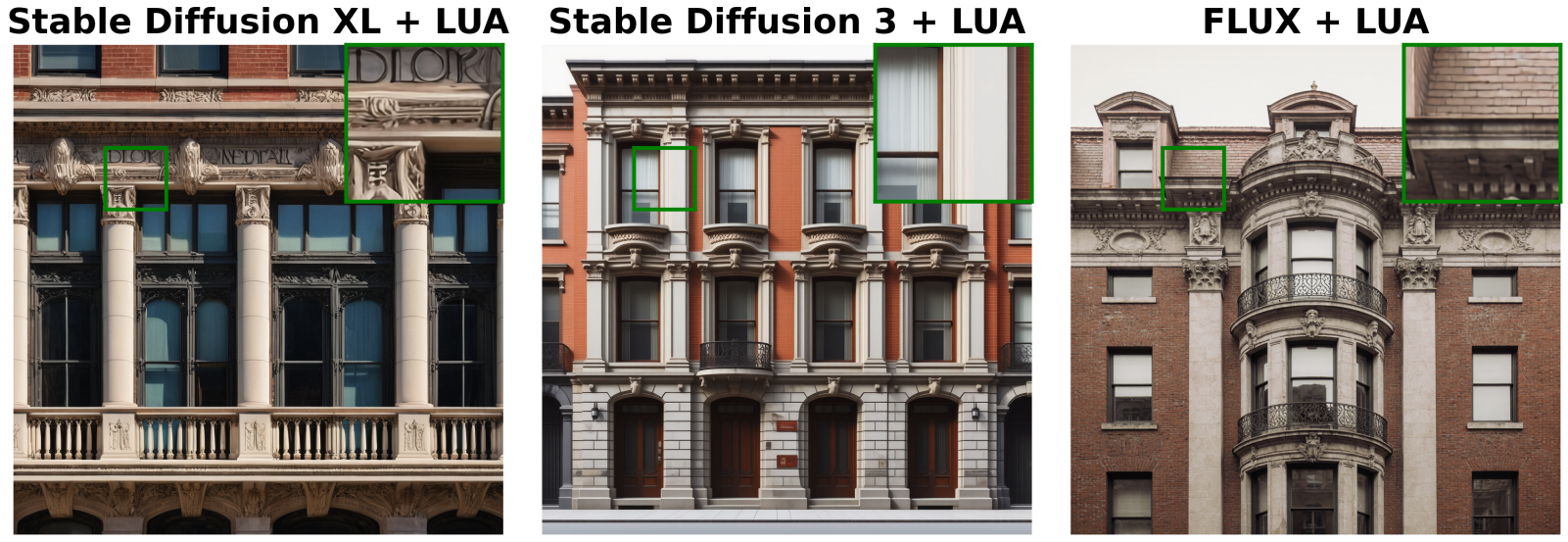
The same LUA backbone upscales latents from SDXL, SD3, and FLUX —
change only the input convolution and fine-tune briefly.
Cross-model ×2 latent upscaling with a single adapter:
128×128 → 256×256 latents from SDXL, SD3, and FLUX,
decoded to 2048². Green boxes: 8× zooms.
Results
Native-level fidelity at a fraction of the cost
The best single-pass fidelity and the lowest latency among compared methods
at 2K and 4K.
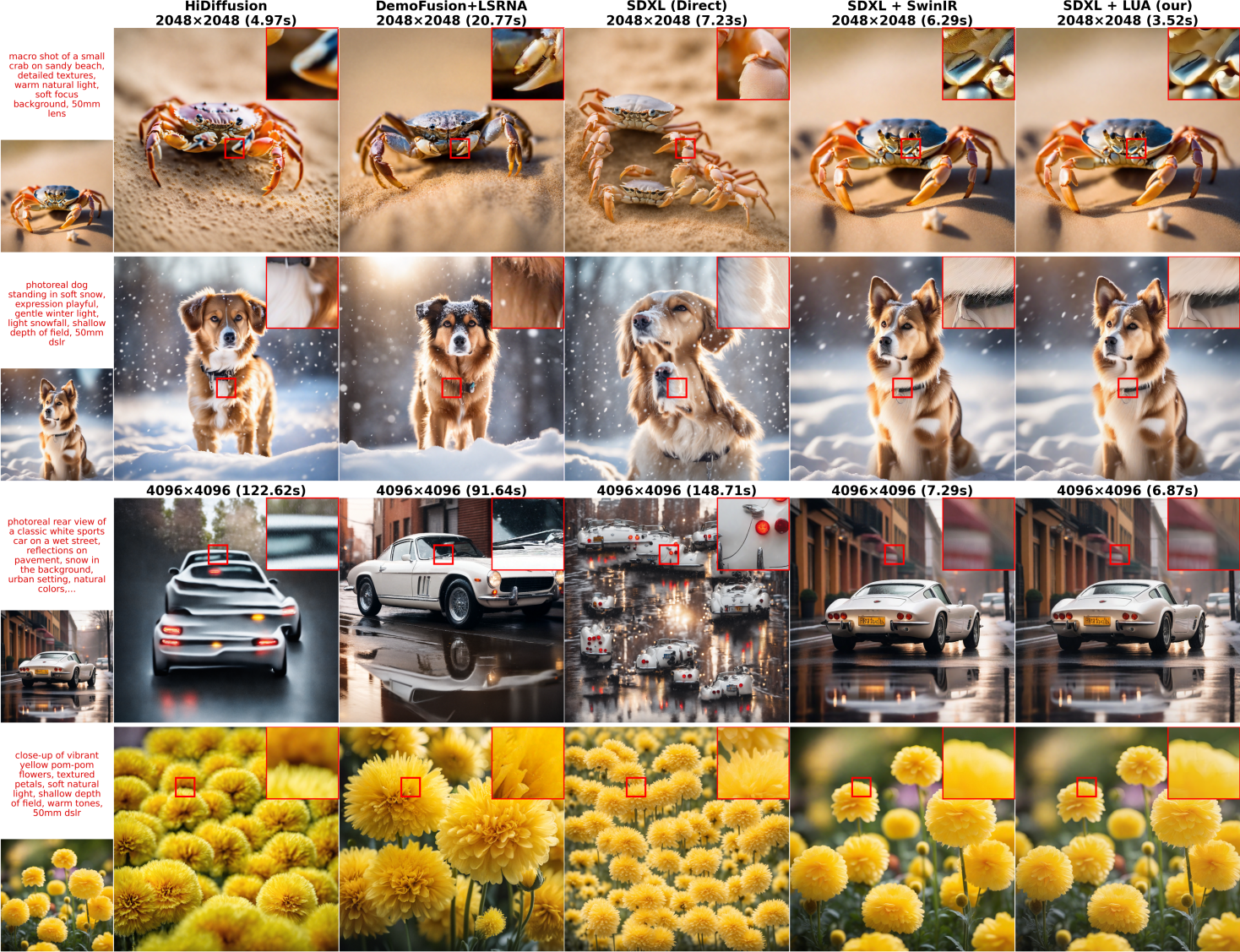
SDXL · 2048²
7.23 s→3.52 s
direct → with LUA GPU: H100
FLUX · 2048²
103.6 s→37.0 s
direct → with LUA GPU: RTX 6000 Ada
SDXL / FLUX · 4096²
6.87 / 31.9 s
with LUA GPU: H100
User study
81.9%
preferred over SDXL direct blind 2AFC, 20 annotators
2048² and 4096² results from identical 1024² SDXL bases; red boxes: 12× crops,
headers: per-image runtime. SDXL + LUA: clean textures at the lowest latency.
Resolution
Method
FID ↓
pFID ↓
KID ↓
pKID ↓
CLIP ↑
Time (s) ↓
2048×2048
HiDiffusion
200.72
114.30
0.0030
0.0090
0.738
4.97
DemoFusion
184.79
177.67
0.0030
0.0100
0.750
28.99
LSRNA–DemoFusion
181.24
98.09
0.0019
0.0066
0.762
20.77
SDXL (Direct)
202.87
116.57
0.0030
0.0086
0.741
7.23
SDXL + SwinIR
183.16
100.09
0.0020
0.0077
0.757
6.29
SDXL + LUA (ours)
180.80
97.90
0.0018
0.0065
0.764
3.52
4096×4096
HiDiffusion
233.65
95.95
0.0158
0.0214
0.698
122.62
DemoFusion
185.36
177.89
0.0043
0.0113
0.749
225.77
LSRNA–DemoFusion
177.95
62.07
0.0023
0.0071
0.757
91.64
SDXL (Direct)
280.42
101.89
0.0396
0.0175
0.663
148.71
SDXL + SwinIR
183.15
65.71
0.0018
0.0103
0.756
7.29
SDXL + LUA (ours)
176.90
61.80
0.0015
0.0152
0.759
6.87
OpenImages evaluation with an SDXL base at 1024². Median per-image runtime
on H100, batch 1. Best per column in bold; lower is better except CLIP. The 1024² block,
cross-model, and ablation tables are in the paper.
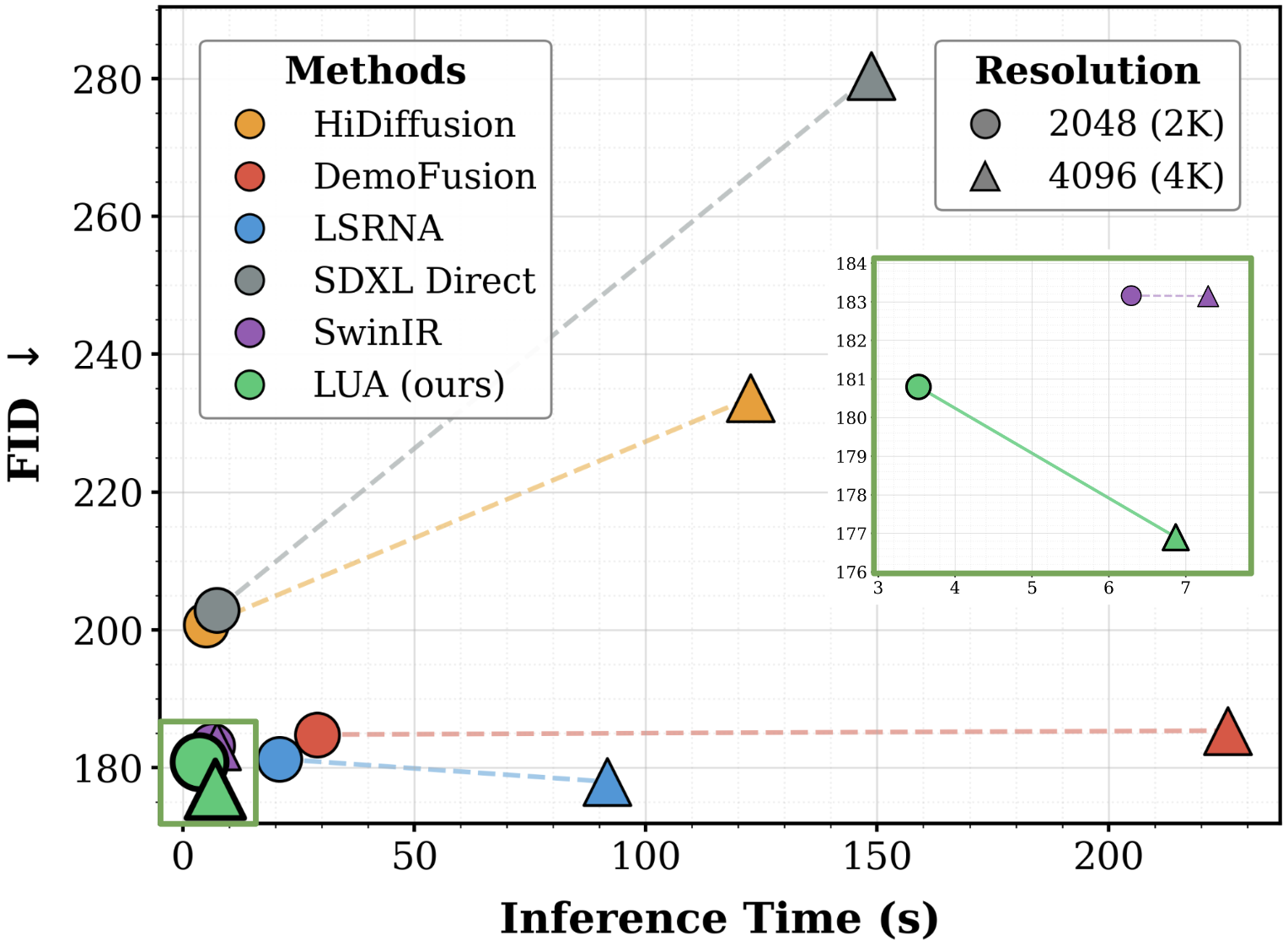
Speed–quality Pareto frontier at 2048²–4096². LUA reaches near-native fidelity
at a fraction of the runtime of multi-stage methods.
Interactive
Drag to compare
The LUA ×2 output against two references: the 1024² base it upscales,
and direct 2048² sampling at ~2.8× the cost.
FLUXFLUX + LUA1024px · 20.4 s2048px · 37.2 s
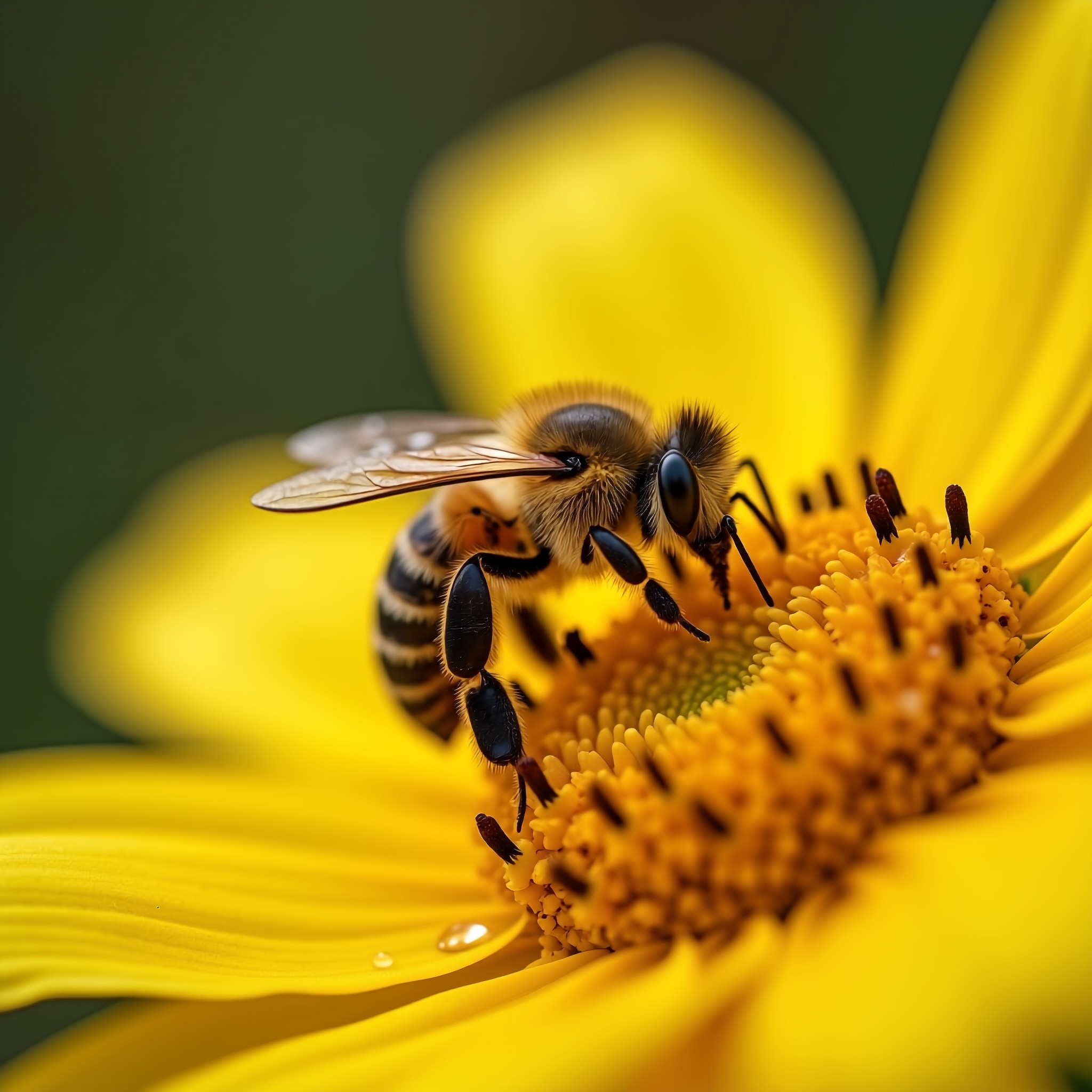
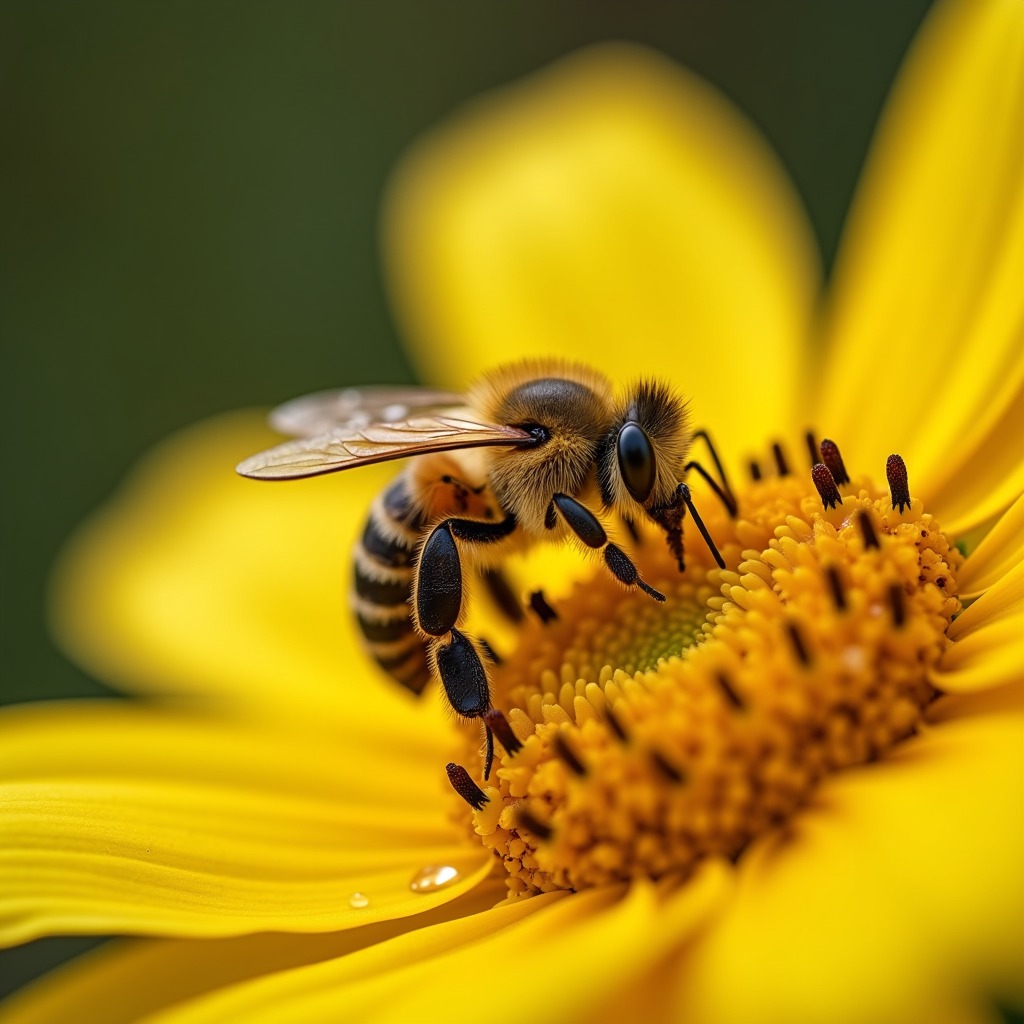
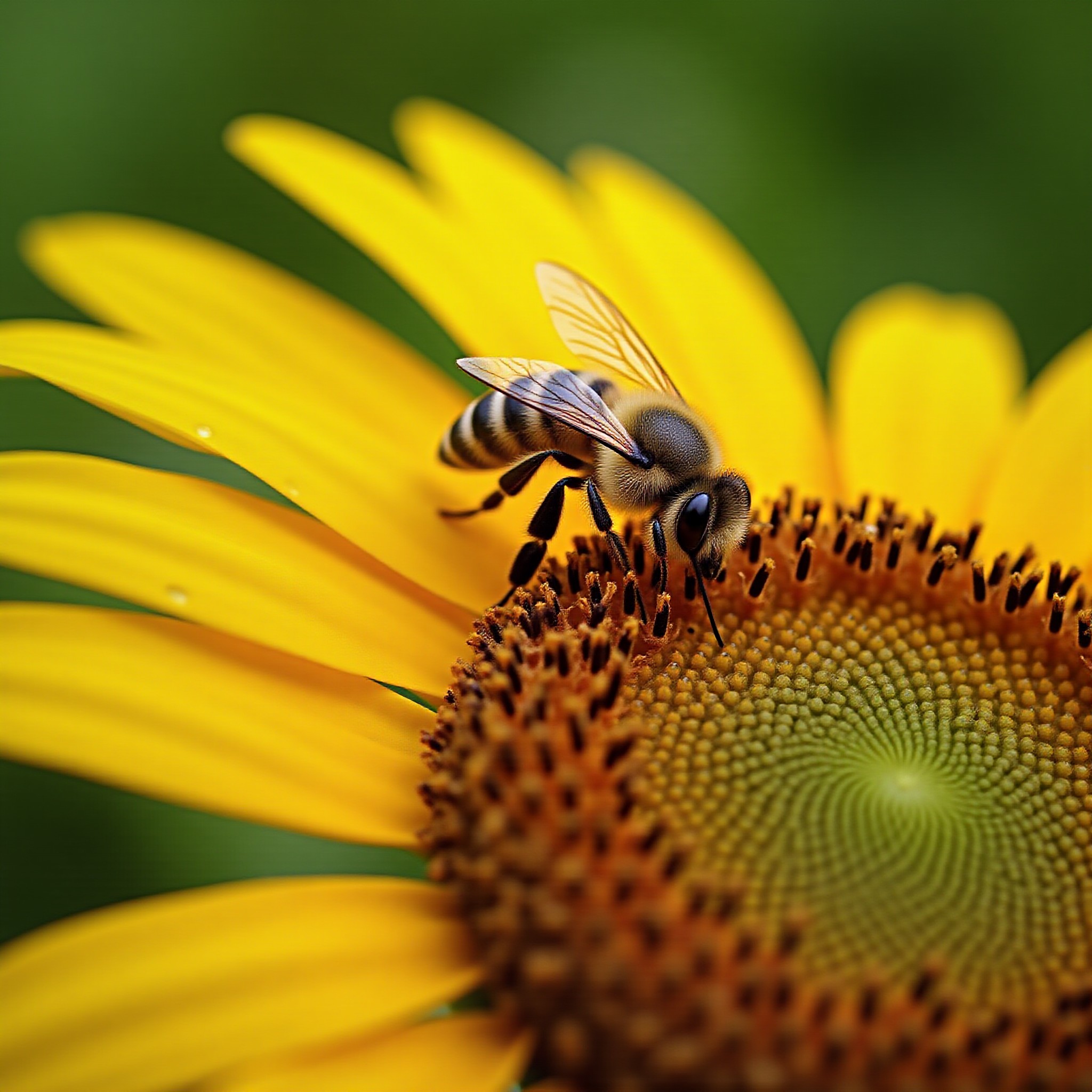
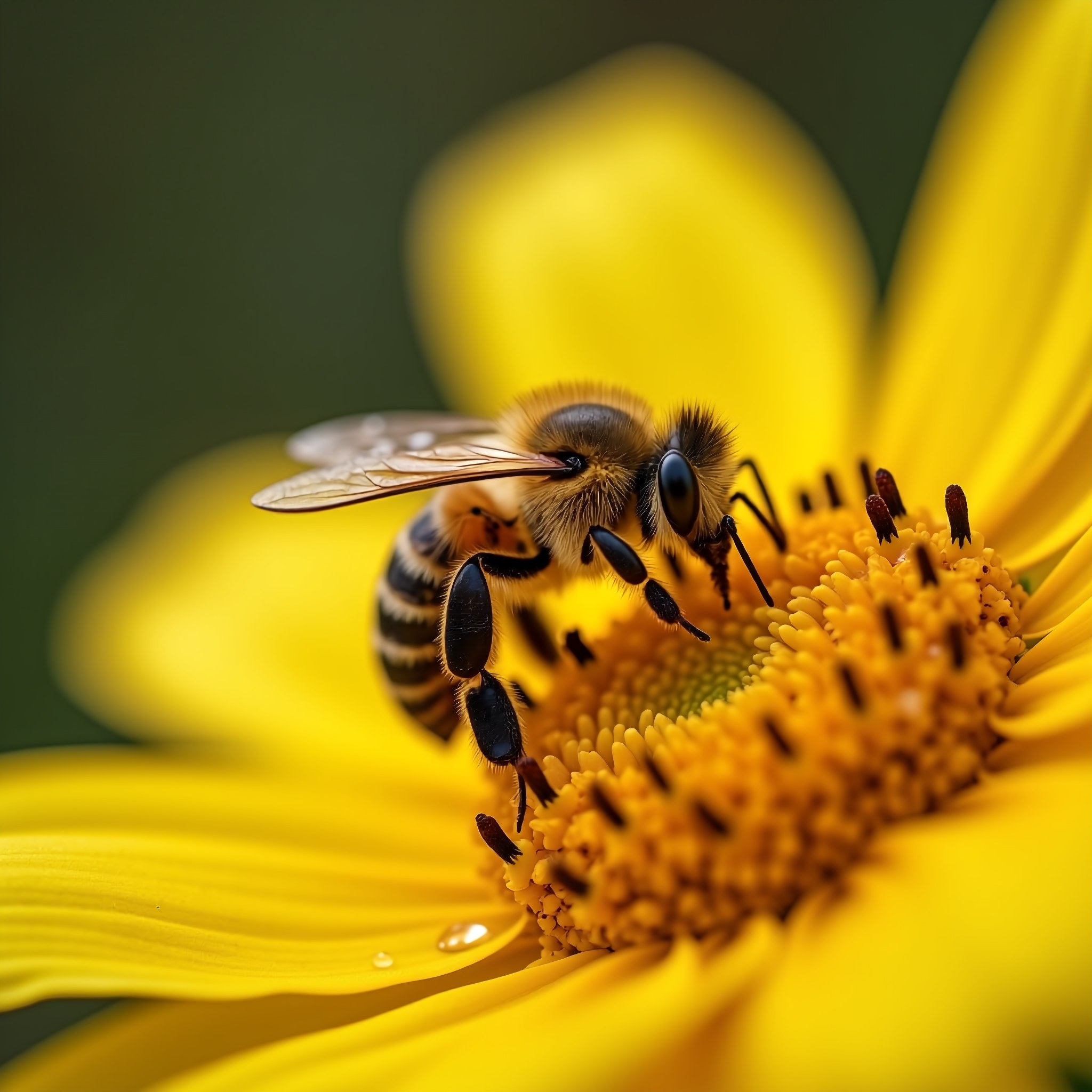
“macro shot of a honeybee on a sunflower, dewdrops, shallow depth of field” —
FLUX, 28 steps; end-to-end times on an RTX 6000 Ada.
vs base shares the seed and base latent (pixel-aligned, shown magnified);
vs direct is native 2048² sampling of the same prompt — compositions differ, shown in full.
Gallery
From the release benchmark
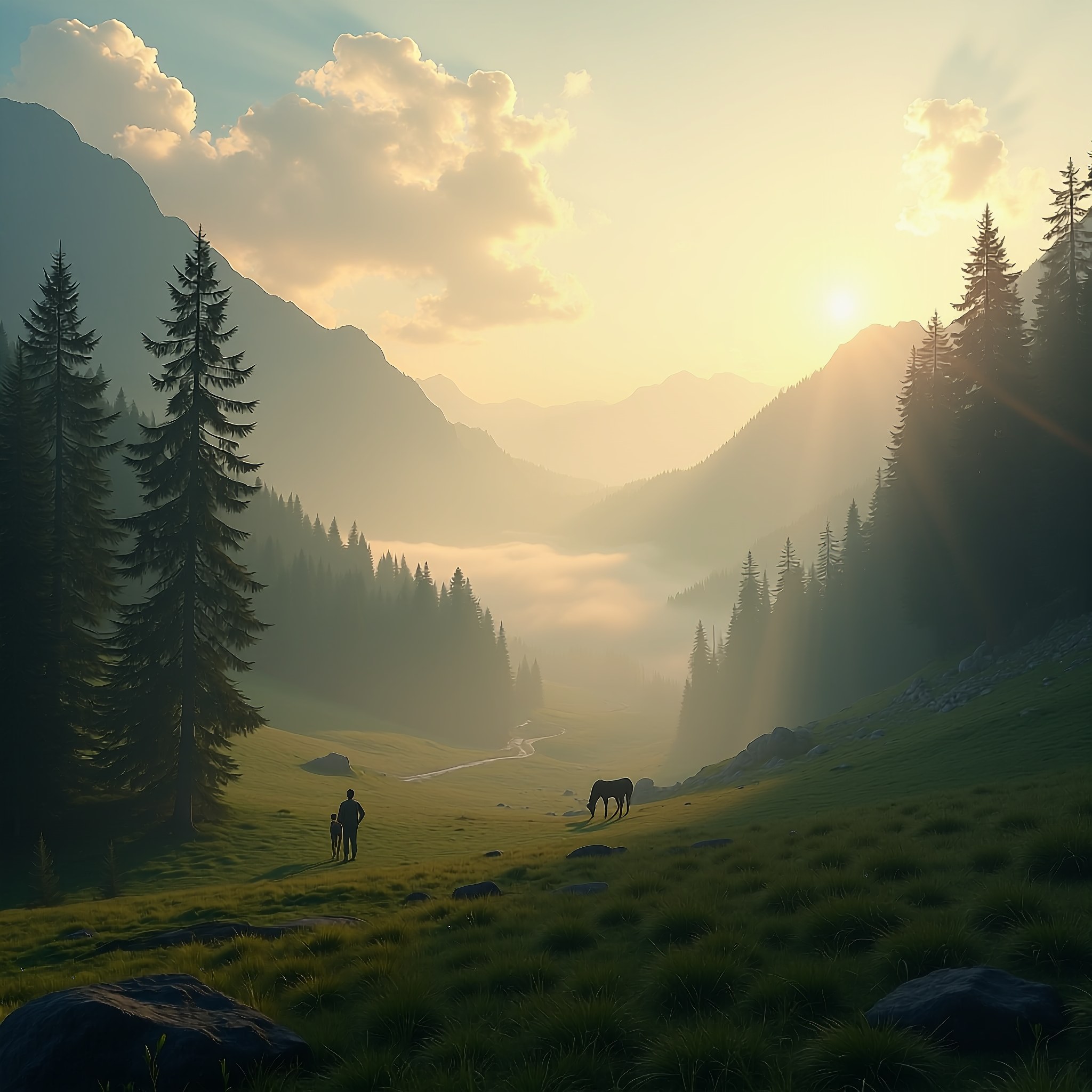
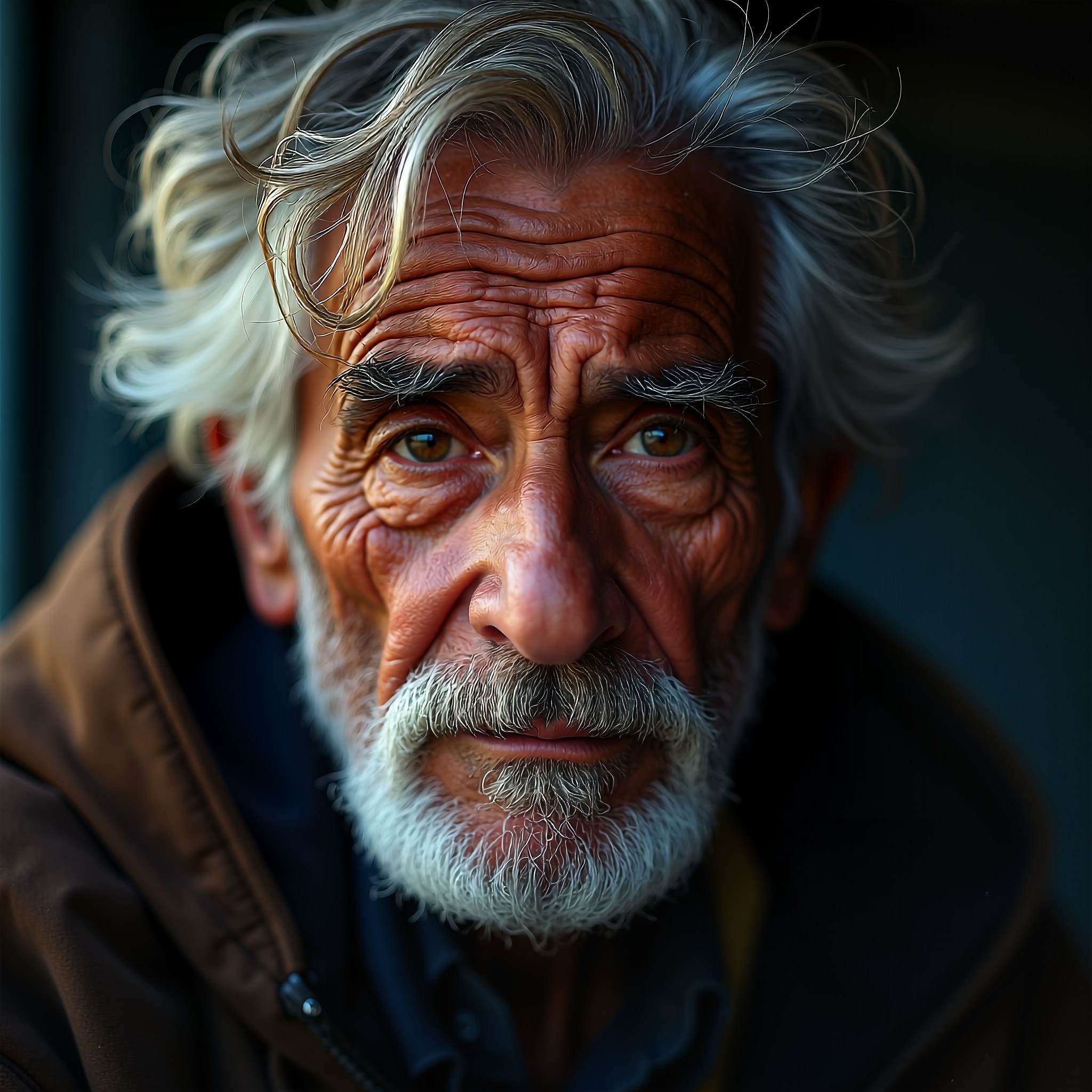
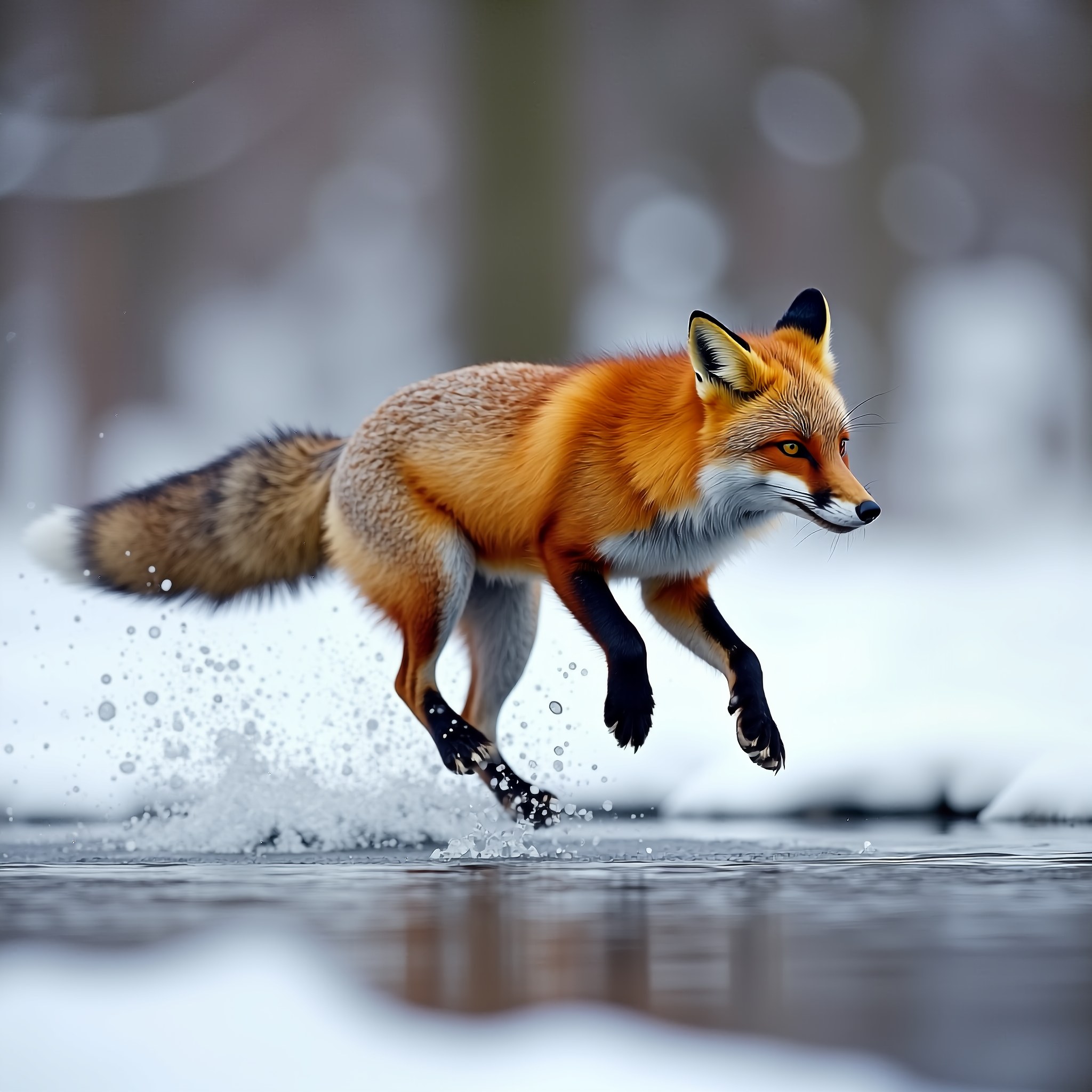
FLUX + LUA ×2 at 2048² on an RTX 6000 Ada — ~37 s per image vs ~104 s direct.
valleyfishermanfoxtokyobee
Domains
Beyond photographs
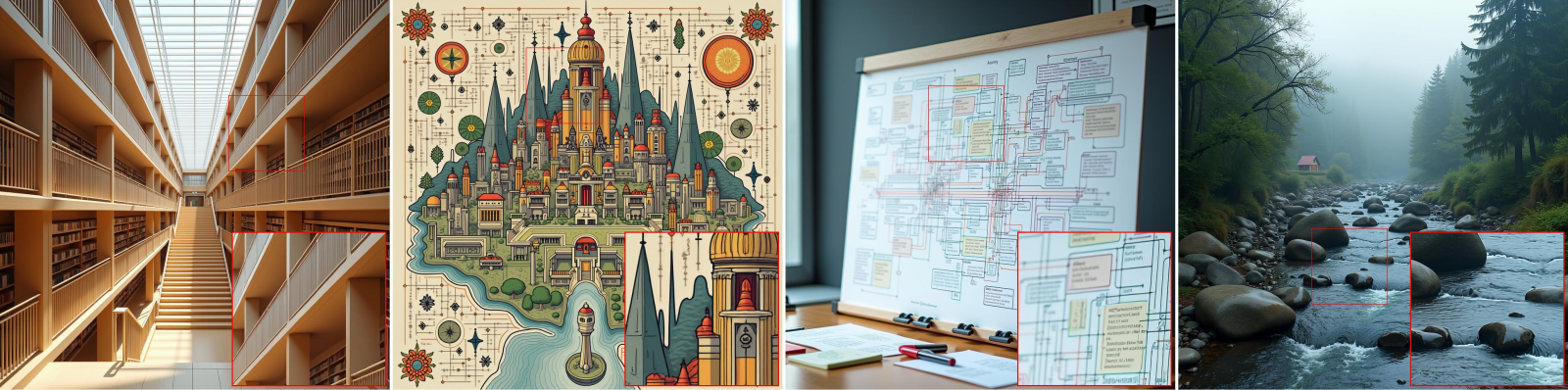
Trained only on photographic crops, LUA upscales stylized and synthetic
content without retraining.